
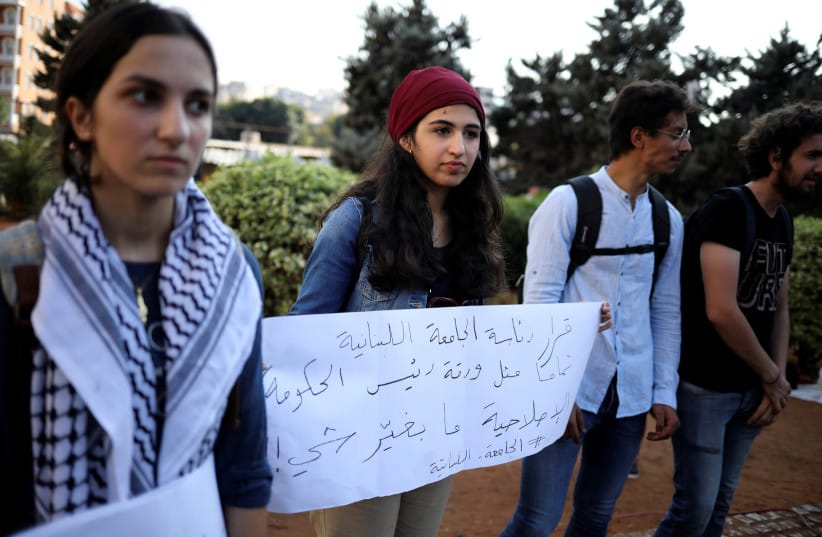
Demonstrators stormed through the streets of Beirut, amid fears that state subsidies of fuel, medicine and wheat flour will soon end. The protest took place on Tuesday, following warnings from United Nations agencies of possible social calamity in Lebanon.
“Support for some basic items cannot continue after the next two months,” Bank of Lebanon Gov. Riad Salamé said on December 1.
The Lebanese pound has continued to drop in value during the country’s prolonged economic crisis. Dozens of protesters also tried to reach the Lebanese parliament building on Monday, while others went to the government headquarters and to the Economy and Trade Ministry, burning tires and blocking roads.
Ajaka added that other foodstuffs have been imported at the rate of some 3,900 Lebanese pounds per dollar. “Therefore, any lifting to the so-called support for basic goods is in fact a complete liberalization of the Lebanese pound exchange rate, where imports currently cost the central bank $700 million a month.” READ MORE
